I became obsessed with the marine industry when I was just 7-years old. Today I’m thrilled to share my knowledge online. When I’m not out there riding, I’m engaging with industry trends and eagerly helping people get more time-freedom online so they can spend more time out there riding their jet skis around.
I started this resource to share my knowledge of jet ski ownership with those around the world. When I'm not out there riding, I'm engaging with industry trends and eagerly awaiting the development of electric jet skis.
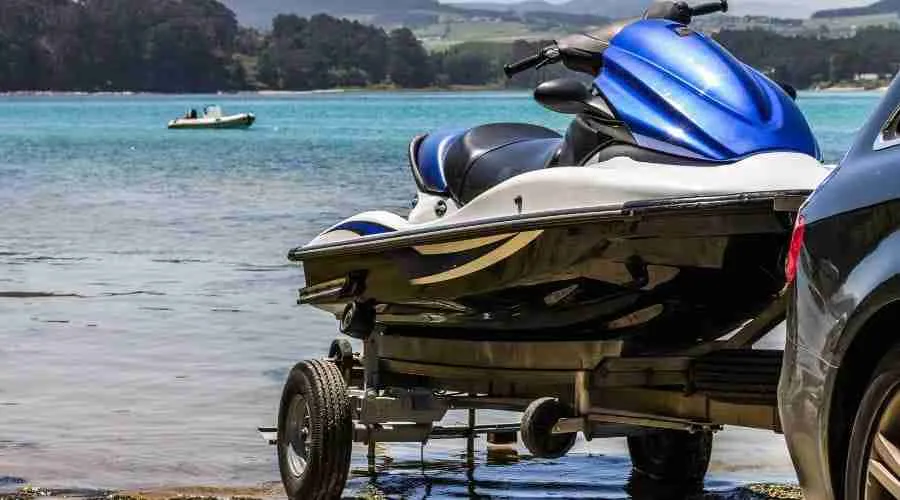
Can run your jet ski when it isn’t in the water and is sitting on the trailer? There is a fear with some beginners that this can cause expensive engine damage.
In this guide, I hope to shine some light on this issue.
Can You Run Your Jet Ski Out Of Water?
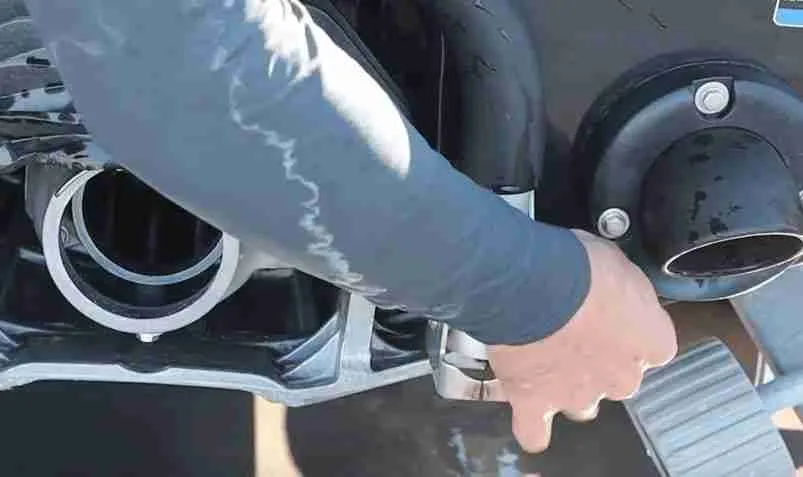
Yes, you can run your jet ski when it’s out of the water and already on the trailer. Warning: You can only run your jet ski for 10 seconds maximum on land.
Turning your jet ski on when it's not in the water 4
Jet skis are designed to run in the water, not on land. The water intake cools the engine and if you leave it running for too long, you risk overheating the engine.
The exception is Sea-Doo. They are unique in the market and our favorite brand of jet ski here at JetSkiAdvice.com though we love Yamaha as well! But the same rule does apply for these too.
Running Sea-Doo Jet Skis out of the water
Yamaha and Kawasaki use sea or lake water to cool the engine while Sea-Doo uses a closed-circuit system. It’s similar to how a car or truck works.
The exhaust system in a way still uses sea-water to cool down the engine so a Sea-Doo jet ski cannot be run out of the water for more than 10 seconds.
Sea-Doo jet skis also come with flush adapters so you can run the engine with a garden hose. To do this:
Get your water hose ready and in position.
Connect the water hose to your flush adapter but don’t turn it on yet.
Start the engine of your jet ski
Quickly (within 5 seconds) turn on the water hose
Run the ski for just a little while to flush salt away
Turn off your water hose
Turn off your jet ski
Note: You should only be using mains or rainwater. Bore water can damage your jet ski.
The guide I’ve outlined also applies to Yamaha and Kawasaki but as always, I recommend you consult your operator’s manual. You can also call your local dealership who can advise on how to do this properly.
Risks of dry running
Overheating a jet ski is a very real risk if you start your jet ski and run it dry. Even 1 minute of running is enough to cause significant damage where your engine will need to be rebuilt and this could cost you thousands of dollars.
Hydro-locking your engine is also quite a reasonable risk and if you don’t do the flushing sequence as I’ve outlined above, then you may also cause some damage that can only be addressed at your local PWC dealer.
For some models, they actually don’t come with flush adapters strangely so you’ll need to buy one.
The Loud Jet Ski Sound
Does your jet ski sound crazy loud and running dry when you start it out of the water? Well, that’s actually quite normal. The pump requires water to float and because it’s on land, it is simply jumping around.
Secondly, your exhaust sound is muffled when submerged in water. When it’s on the trailer, well it sounds very dry.
Cleaning Properly
Most people start their jet skis on land to clean it properly. I’ve written an extensive guide on how to clean jet skis so your personal watercraft stays in tip-top condition.
Jet Ski Life Jackets vary in the market, with some being very comfortable and represent good value. I’ll show you the best PFD options in this buying guide.
I personally love riding out there in the ocean at any chance I can! But….I put safety on my PWC first and foremost. It’s so easy for something to go wrong and you’ll be in trouble very quickly if you’re not wearing the most important piece of protection when out there riding.
Best Jet Ski Life Jackets
In writing this guide, I look at what’s best on the market and what current jet ski riders are using right now while riding. Whether that’s ocean swell, river canals or calm lakes, there’s certainly a life jacket for you.
I really do believe the O’Neill Men’s Reactor USCG Life Jacket offers excellent value for money. It’s designed exclusively for high-speed water sports such as jet skis and tubes.
USCG Approved Personal Flotation Device; Perfect for Wake Sports, Waterskiing, Tubing, and Swimming
Segmented Foam Core And Anatomical Flex Points Allow Unrestricted Movement
Quick Release Safety Buckles And Heavy Duty Front Zipper Create an Unparalleled Sense of Security
Minimal Bulk Design Allows Full Mobility, While Expansion Panels Enable a Comfortable Fit
Relaxed Fit For The Water Sports Enthusiast Who Wants Some Room To Move
It’s approved by use through the United States Coast Guard as a personal flotation device while also not being restrictive for the wearer. Essentially, this gives you freedom on the handlebars to move around.
There are two buckles plus a strong zipper which lasts for a long time. You can also buy this in a range of colors so it appears to both Yamaha and Sea-Doo owners.
SMALL O'Neill Men's Assault USCG Life Vest Blue Neoprene
The close runner-up on this list is the Airhead jet ski life jacket Swoosh model. It’s a Type III jet ski life jacket that is closed sided. This is really great for children and adults alike.
Airhead Adult Swoosh Kwik-Dry Neolite Flex Life Vest, Red, Youth
As it’s made with neolite quick-drying materials, you’ll know that it isn’t going to take hours to dry off before throwing into the back of the car once you’re done riding. That’s something I really like about this one.
Also, it’s available in a few different colors and is ideal for adults, but they also make a kids version.
Airhead Swoosh Kwik-Dry Neolite Life Jacket 30076-03-B-BL, Type III, Adult
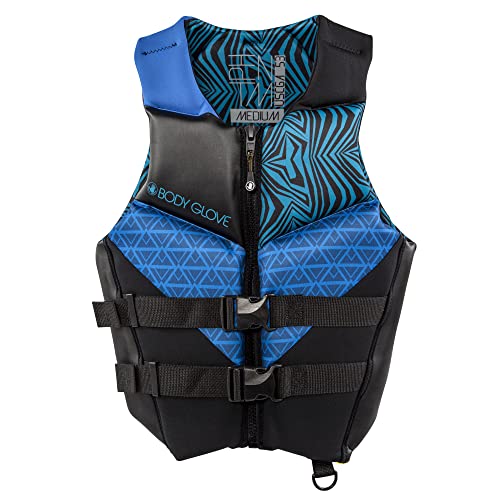
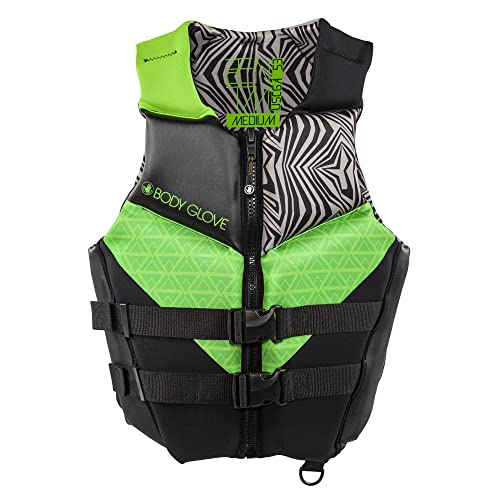
This is definitely more of a racer-style life jacket. If you’re looking for something ergonomic but also looks great when you’re riding, then I’d take the Body Glove Phantom.
Body Glove Men’s Phantom USCGA Life Jacket PFD-BLU/AQU2-S
This life jacket is ideal for jet ski riding as well as other watersports. Let’s say you’re into water sking, wakeboarding or simply tubing, then you’ll love this one.
The foam is super soft on this model which means it’s quite flexible for the rider who doesn’t want to feel like they’re being hugged too much. It’s also less likely to ride up and touch your neck the moment you fall into the water.
2x Body Glove Phantom Women's Life Jacket Life Vest USCG & TC Approved Med
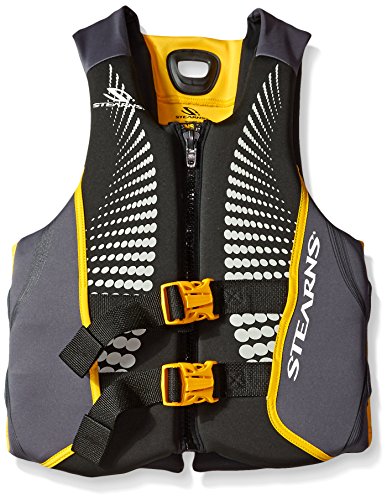
This one is quite unique and something I’m so excited to add to my roundup of the best jet ski life jackets of this year. As USCG approved, the Stearns Men’s V1 Series Hydroprene Life Jacket is seriously a great choice for new riders with strong reviews based on rider feedback.
Stearns Men's V1 Series Hydroprene Life Jacket, Medium, Gold
Lightweight Hydroprene material construction for softer comfort and more maneuverability
V-Flex sculpted back design moves with you
Ride up tabs to readjust the jacket after you jump into the water
Durable construction: Hydroprene material shell, PVC foam, zipper and two 1.5-in. (3.81 cm)webbed, buckled straps
I personally have seen a few riders wearing these life vests out there. It seems the V-Flex sculpted back design and ride up tabs really does help to make this a life jacket that you can feel comfortable wearing.
My recommendation is to pick the green color as it’s less likely to get hot in summer. The other option is the black color which really heats up after 30 minutes of riding around.
While popular with surfers, you can still use the O’Brien line of life jackets for jet skiing and other high-octane water sports. This isn’t a flexible life jacket but if you want wind protection and something that really hugs you tight, then you’ve found the right option.
This is a Type III Personal Flotation Device (PFD) and comes with a PWC lanyard attachment ring. Essentially – they have really thought of the riders in mind when they created this.
The reviews of O’Brien life jackets for jet ski riding are very strong. Just remember that they are designed for a snug fit, not a loose fit so avoid going up in size where possible.
Did you know that Sea-Doo makes their own life jackets for their jet ski riders? Neither did I because I was too blindsided by all the mainstream brands on the market.
I’ll admit – I don’t like their designs here. They could be so much better which I guess why these models aren’t so popular. BRP should just stick to what they’re good at – making fast machines!
I like this one as the zipper is off to the side. It just feels more secure though the straps could be stronger.
Maybe you’re looking for something aggressive? That’s where the JetPilot Sullen is the ultimate life jacket for you. It’s got the signature looks and affordable pricing to match!
It’s very lightweight and low bulk. The only thing we wonder is why didn’t JetPilot make this as a summer life vest with lighter colors, but it seems they are clearly going after the total speeding rider.
It’s made from a neoprene and nylon combination with good comfort and great styling.
Buying Guide: What To Look For
Now not every life jacket you come across for any watersports activity is made the same. This is why you need a specific one when riding your personal watercraft.
Top tips:
Look for US-Coast Guard approved as boat life jackets aren’t suitable.
Ensure there is a spot to connect your safety languard to the life jacket
If you ride in cooler areas, look for black to keep you warm out there.
If you ride in warmer areas, look for other colors that help deflect the heat
Be mindful of the use-by date and you risk a big fine if you ride past this date.
What are jet ski life jackets made from?
Jet ski life jackets are essentially made from two materials: Neoprene and Nylon. Neoprene is much more popular as they are incredibly comfortable to wear and keep warm with, though they do get heavy once wet. Unfortunately, they do cost more. Nylon is a great choice if you value simplicity and value.
Is there a difference between mens and womens life jackets?
Yes, manufacturers do make different jet ski life jackets for men and women. Men’s life jackets can be worn by women, but women’s life jackets can really be worn by women (the colors give you a hint). The main difference with female life jackets is the armholes and chest area is built differently as you would imagine.
What size should I get?
It’s often easier to go to a jet ski dealership to try on some life jackets but this isn’t always possible. Instead, I can recommend you measure yourself properly. The vest should always feel snug but not restrictive since you’ll be wearing this for hours on each ride. All of the life jackets I featured on this buying guide here actually have reasonably accurate sizing guides for the smallest of riders (including children) right up to large adult riders.
Is there anything else I need?
Yes! I can recommend a safety whistle, a neoprene vest underneath to prevent chaffing and a nightlight if you’re riding after dark. Also consider buying a few different life jackets so if you have friends and family come riding, then you’ve got some great options to keep everyone entertained!
Clearly there are some great options for personal watercraft enthusiasts that I’ve listed here. This isn’t all that’s on the market but if you ride a Yamaha, Sea-Doo or Kawasaki, you’ll be more than happy with these whether you’re just towing tubes or riding big waves.
Most people do buy their life jackets online nowadays and I can feel safe with that recommendation. If there’s anything I can do to help, then let me know!
We’ve done the research to find the price of jet skis in 2022 across the United States and Australia. Yamaha, Sea-Doo and Kawasaki jet skis are listed here.
In real-world terms, jet skis do vary in price and will cost between $6,000 for a cheap one with very little power, up to $25,000 for a luxury top-of-the-range jet ski. It really depends on your needs and budget.
The costs also depend on whether you’re buying a new or used PWC. If you buy a used jet ski, then you can expect to save between $2,000 and $7,000 off the new price.
Jet Ski Pricing 2022 Guide
Here is a completely updated pricing guide for the 2022 jet ski season for the main 3 manufacturers. We have created this guide and updated it each year so that you know how much a jet ski will cost in North America and Australia.
These numbers are assuming you were to buy a new one from the dealership without promotions applied.
Make
Model
USD Pricing
AUD Pricing
Sea-Doo
Spark 2up 60HP
$5,699
$8,769
Sea-Doo
Spark 2up 90HP
NA
NA
Sea-Doo
Spark 3up 90HP
$6,990
NA
Sea-Doo
Spark 2up 90HP iBR
NA
NA
Sea-Doo
Spark 3up 90HP iBR
$7,990
$10,999
Sea-Doo
Spark TRIXX 2up
$7,899
$12,069
Sea-Doo
Spark TRIXX 3up
$8,499
$12,969
Sea-Doo
GTI 90
$9,299
$14,989
Sea-Doo
GTI 130
$10,299
$16,289
Sea-Doo
GTI SE 130
$11,099
NA
Sea-Doo
GTI SE 170
$11,699
$17,989
Sea-Doo
Wake 170
$12,499
NA
Sea-Doo
GTR 230
$12,899
$20,409
Sea-Doo
GTX 170
$13,399
$20,809
Sea-Doo
GTX 230
$14,399
$23,909
Sea-Doo
GTX 300
$16,099
NA
Sea-Doo
GTX Limited 300
$18,299
NA
Sea-Doo
Wake Pro 230
$16,499
$26,509
Sea-Doo
Fishpro Scout 130
$13,899
$19,609
Sea-Doo
Fishpro Scout 170
$15,899
$22,709
Sea-Doo
Fishpro Trophy 170
$17,799
$27,309
Sea-Doo
RXP-X 300
$16,099
NA
Sea-Doo
RXP-X RS 300
NA
$27,409
Sea-Doo
GTX Limited 230
NA
NA
Sea-Doo
R-XTX 300
$17,499
NA
Sea-Doo
RXT-X RS 300
NA
$29,209
Sea-Doo
GTX Limited 300
$18,299
$29,909
Yamaha
EX
$7,199
NA
Yamaha
EX Sport
$8,299
NA
Yamaha
Superjet
$9,799
Unavailable
Yamaha
EX Deluxe
$9,299
NA
Yamaha
VX-C
$9,449
Unavailable
Yamaha
EXR
NA
NA
Yamaha
VX
$10,499
NA
Yamaha
VX Deluxe
$11,249
NA
Yamaha
VX Cruiser
$11,549
NA
Yamaha
VX Limited
$12,849
NA
Yamaha
VX Cruiser HO
$12,449
NA
Yamaha
GP1800-R HO
$13,149
NA
Yamaha
FX HO
$14,299
NA
Yamaha
FX Cruiser HO
$14,799
NA
Yamaha
GP1800-R SVHO
$15,349
NA
Yamaha
FX SVHO
$16,799
NA
Yamaha
FX Cruiser SVHO
$17,499
NA
Yamaha
FX Limited SVHO
$19,099
NA
Kawasaki
STX 160X
$9,899
NA
Kawasaki
SX-R
$10,299
NA
Kawasaki
STX 160X
NA
NA
Kawasaki
ULTRA LX
$11,699
NA
Kawasaki
STX 160LX
NA
NA
Kawasaki
ULTRA 310X
$17,299
NA
Kawasaki
ULTRA 310R
$16,488
NA
Kawasaki
ULTRA 310LX
$19,299
NA
Editor’s Note: These prices are reflective of jet skis only and do not include trailer, registration, insurance and any state sales taxes if applicable. Please call your local dealership for the most accurate pricing.
How much does a jet ski cost? [2022 price guide] 74
Editor’s note: Please keep in mind that the COVID supply chain crisis has meant that a jet ski ordered today in early 2022 may take 6 to 9 months until delivery. This is impacting the entire marine industry.
Additional purchase expenses
In addition to the cost of purchasing a jet ski, you’ll also need to set aside an additional 20% of your budget for the following:
A quality new trailer from the same dealership. Don’t take the risk of buying a used jet ski trailer as we detail in that reader’s guide.
Your safety gear. Budget between $300 and $700 for safety gear including life jacket, wetsuit, helmet and gloves at a minimum.
Additional accessories. These include a quality GPS device, tow tubes and fishing rod holders.
Most people are surprised to see the true upfront cost of a new jet ski.
How much do jet skis cost to maintain?
This depends on how often you use your jet ski. If it’s used every weekend, you can expect to have to understand several scheduled logbook servicing internals annually which will cost $250 for labor, not including parts.
In addition to the servicing cost and parts, you’ll need to pay registration each year for your jet ski, as well as registration for your trailer. Depending on your state, you may also need to pay insurance on both the jet ski and trailer too.
The main reason that people sell jet skis is that they can be expensive to maintain. Clearly, it’s not just the upfront cost that we’ve defined here that should be taken into account.
How much fuel will a jet ski use?
On average, it takes 2 to 3 hours of continuous use on a jet ski to completely empty the gas tank. Consider that the more fuel-efficient jet skis such as the Sea-Doo GTI 90 and GTI 130 will often allow riders to ride longer and further where they may clock 4 hours of use.
You won’t be riding continuously though with many riders choosing to stop for a rest 2 to 3 times when out riding. There are fuel stations in most places, but if there aren’t, you can always bring additional fuel.
Which jet ski brand should I buy?
There are only 3 main jet ski brands in the PWC market today. These are Sea-Doo, Yamaha and Kawasaki. The most popular jet skis are Sea-Doo but they do have a mild reputation for unreliability, with Yamaha proving to be very reliable though lacking in features and style.
Kawasaki, as the poor runner-up with less than a dozen jet skis in their line up, still pack a good punch. If you want a stand up jet ski instead of a sit-down jet ski, then you’ll need to buy a Kawasaki. Their top-of-the-line sitdown jet skis have won many races around the world for their incredible speed and handling abilities.
How long do jet skis last?
Between 200 and 400 hours. In contract, for the more reliable jet skis which aren’t built for performance, you’ll find used jet skis on the market which are at the 300-hour mark. These jet skis will get an additional 100 hours before needing a full engine rebuild. The performance jet skis often are retired after 200 hours (approximately 70 rides) as their engines cannot handle the strain in such harsh conditions.
Can I ride my new jet ski at night?
Jet skis can be ridden at night within certain states and countries, though night riding isn’t normal and you’ll need to ride slower. For this reason, almost none of the manufacturers by default are not installing navigation lights on jet skis so you’ll need to get some aftermarket lights installed from your dealer.
Is it worth me buying one?
With all of that in mind, is it worth buying a jet ski to go riding with? It seems some people are worried about everything and they shouldn’t be.
You see, these days jet skis are more reliable, cheaper and are more fuel-efficient than 10 years ago. Buying a jet ski is worth it if you’re riding at least twice per month, otherwise, just hire one and let others deal with the expenses.
Jet ski accessories are the type of products you’ll need to have more fun out there on the waterways, as well as being safe and legal. In 2022, it’s time to leave the challenges of the year prior behind and let loose out there on the waves or in the inland waterways.
In this guide, I’ll be showing you the best personal watercraft accessories that you should buy regardless of your make and model. From the popular Yamaha and Sea-Doo riders, across to Kawasaki and even Honda, you’ll find some great options here.
29 best jet ski accessories [#17 is awesome] 194
Jet Ski Safety Accessories Guide
Let’s jump straight into this incredible buying guide. Many of these products you’ll find at your local dealership as well as online, sometimes for cheaper and free delivery.
These are the most popular jet ski accessories of 2022:
Everyone brings their phone on to their jet ski but forgets to bring a dry bag. I recommend that you pack a dry back that lives on the jet ski at all times, even when it’s in storage.
Also – don’t get a cheap one. Look at the quality offerings. I really like the Sea to Summit Big River Dry Bag which is very affordable at this time.
Most often overlooked by beginners is the need to have a jet ski anchor. You don’t realize how important this is to have until you come up to a beach.
Jet ski anchors aren’t used for anchoring in 20 feet of water. Instead, you’ll use them for keeping your jet ski from drifting away from the beach when you go for a quick 15 minute break.
Very few people actually have jet ski fenders and they should! Sure – the rails on jet skis are pretty tough but those scratches look terrible.
Jet Ski Fenders, also called bumpers in some regions, are really built only for personal watercraft. They’re small, light and quite affordable so there isn’t any reason why people would avoid these.
Rarely will you see someone with a jet ski paddle and that’s a good thing! This is more of an emergency device than it is for any other reason.
Essentially, this comes in hand if you’ve run out of gas, get a flat battery, need to draw attention to yourself or even as a rescue aid. My favourite at this time is the Seachoice series which are the smallest in the market once collapsed, meaning they can fit within the front storage locker of your jet ski.
Some people have also used it in place of a jet ski anchor. You bury it in the sand on the land with some rope tied to it which is connected to your jet ski. You’ll need to bury it fairly deep and at a particular angle to actually be effective, plus you’ll be covered with lots of sand afterwards. For under $50, it’s just easier to buy an anchor.
Jet Ski Covers are just about mandatory if you want to preserve the value of your jet ski. It not only stops the harsh sun from damaging the paintwork and electronics, but also the rain and bird droppings.
It’s generally best to get a genuine jet ski cover, not a fake imitation. The real covers use superior materials and generally will last as long as the jet ski does.
Can you use your jet ski cover on the highway? There are mixed reports. Some jet ski riders transport their jet skis on the highway with the cover on and have no problems, while others claim their covers suffered cuts and holes after the first 2 to 3 trips at highway speeds.
Generally it’s unnecessary to use your jet ski cover when traveling on the highway unless it’s very hot and sunny. You’ll also need to be mindful that you have properly clipped everything together.
6. First Aid Kit
Every powered marine user needs to have a first aid kit on hand. Yes, even a small one for your jet ski is enough to get by with the total basics.
You may suffer injuries when riding such as a cut toe or a pinch when pulling up your jet ski anchor. Knowing that you have something to mend the wound and can continue riding within a few minutes is certainly great peace of mind.
In addition, consider the other marine traffic. Kayakers, surfers and SUP riders might need your assistance out there on the waterways.
Just like having a solid first aid kit, you also need to have safety flares in most areas. These can be very small and it’s unlikely you’ll ever use one.
Be mindful that these safety flares don’t like heat so it’s best to store them at the very bottom of your storage locker. At the same time, make sure they’re easy to reach as you don’t want to be digging through everything when your jet ski is sinking.
Many jet ski riders fail to check their safety flare expiry dates and only realize their error when it’s time to sell. Keep an eye on those dates and discard your flare safely once it’s past this date. Never use a safety flare just for fun with a few buddies one Sunday afternoon as there are serious fines involved if you are caught.
On your life jacket you really need to have a safety whistle and in most areas it’s also compulsory. Make sure the cord that’s attaching it is also in good shape.
The whistle otherwise hardly gets used so just be mindful to check this on occasions for any stuck debris or damage.
A swimming pool noodle (aka shock tube) is a brilliant idea to prevent sucking up debris into the rear of your jet ski. That includes seaweed, rocks and tow ropes.
Yes, these don’t look all that attractive. But what’s also not attractive? Having to spend 2 hours in the water paddling back to shore in order to fix a clogged impeller.
You’ll need to buy these and cut them down to length. They are also excellent for inside your front locker to stop items from being thrown around at high speeds such as your anchor and water bottle.
This is so often forgotten about. Generally you’ll take some snacks out there with you for a day jet skiing around, but where do you put your rubbish? It looks terrible inside the front locker.
Sure, you can dispose of certain foods into the ocean but the plastics must be disposed properly. Get yourself some small rubbish bags that live in the front of the jet ski. They also come in handy as vomit bags if your passenger gets sick.
Having some rope with your jet ski is very important, both for docking safely but also for towing tubes and other another ski. Consider actually having 2 ropes. One attaches to the dock and the other prevents your jet ski from ‘wandering’ out at the rear.
By having 2 dock lines, you can also better get on and off the jet ski without tumbling over as it will be locked in the same position. When people go from a stationary dock to a buoyant jet ski, that’s generally when accidents happen.
There are two trains of thought here. You get a Spot Tracker to let your friends and family know where you’re going for the day, while having a safety feature working similar to an EPIRB. The other train of thought is a tracking device to stop theft.
My recommendation? Just get both. The costs for these have dropped significantly in recent years so you can protect both yourself and your jet ski from potential harm.
13. Spare Life Jacket
You’ve always got that friend who wants to come and ride on your jet ski. You’re reluctant but you eventually give in, but what about a life jacket?
My recommendation is to always have a 2nd lifejacket on standby. There isn’t any need to buy a brand new one. You can find cheap ones in good quality right off Craigslist, Gumtree or Ebay.
Securing your jet ski with a lock to either your trailer or the dock will go a long way to prevent jet ski theft. The thieves are out there and they’re looking for opportunities to take your pride and joy away from you.
It’s really inexpensive to get yourself a great quality jet ski lock nowadays. Just keep in mind that you can’t leave it locked for months and months in the rain as they typically corrode and rust out.
We’ve written an extensive guide for jet ski gps devices to help you find the right model for you. Essentially, we would certainly recommend getting one.
Some people claim that you can now do just fine with a mobile phone. The trouble is signal blackspots as well as accidently dropping your phone into the ocean. Even if it’s in a waterproof case that floats, you still run the risk of it overheating in direct sun which won’t happen with a formal jet ski GPS.
You just never know when you’re going to need duct tape and zip ties. Got a whole in your jet ski wetsuit? Use the duck tape. Broken strap on your life jacket? Reach for the zip ties.
These are also handy for making quick and temporary repairs to your jet ski and tow tubes. Essentially, enough for you to get back to shore and make formal repairs.
A popular Australian chemical is Salt-Away which is designed for your engine bay. Essentially it stops the salt from corroding the engine meaning you’ll get many more hours before it finally needs to be retired.
Why is it so awesome? Because it’s very affordable and the solution lasts a long time with lots of positive reviews and ratings. Another great alternative is Salt Off by Star Brite as well as the CRC Salt Terminator flush inhibitor.
These days you often see people going jet ski fishing with rocket launchers at the rear of their jet ski which is mounted with a cooler or esky. Neat idea!
The cost on these vary and you can expect to pay between $100 and $250 just for fishing rod holders and anywhere from $200 to $700 for a properly mounted jet ski cooler at the rear. Not cheap, but certainly beats buying a boat!
Getting something clogged in your impellar is the worst feeling in the world. By having a spare knife on hand will really help you get back to riding at full throttle pretty quickly.
In addition, they can be used if you go jet ski fishing too or to untangle fishing nets. You’ll need to replace these every few months as they will rust out but they are so affordable these days to buy online.
Most jet skis don’t come with ladders and for the unfit people among us, they certainly can help. It’s really hard when you take a passenger for a ride, go for a swim and then they can’t get back on the jet ski properly without a helping hand from you. A jet ski ladder fixes all of that.
The aftermarket ladders are made from nylon. Essentially they are lightweight ropes that simply hook on to the rear and won’t get caught up in the propeller. Price? Super affordable. 😀
Ah yes, there are certainly lots of jet ski tubes that you can tow behind. Keep in mind that the lower horse power jet skis will struggle to tow much weight and so you may be restricted to just one to two small children.
These tubes can really help you have more fun out there on the waterways as it isn’t just about high speeds and doing jet ski jumps. In addition to the tubes, you’ll need a rope, 12v air pump and repair kit, as well as lifejackets for each rider.
Sure, you might never ride your jet ski at night time but you have to plan for the worst. Imagine the engine ceasing 1 mile from the boat ramp and you’re stuck out there. You make a call to the Coast Guard for assistance but as the sun is falling, you’re really worried because how will they find you?
By having a waterproof flashlight in the front locker at all times, you’ll feel much more safer and in control. You can also use this torch when you’re unloading your jet ski at the boat ramp in the very early morning before anyone else gets there, apart from the avid early-morning fishing crew.
When you’re out riding, you typically will drink more water than you anticipated. Worst still – you’ll rock up to the boat ramp without any water with you at all.
I recommend that you pack a very large water bottle in the front locker before leaving home. Call it the ‘jet ski bottle’ exclusively for the jet ski.
Yes, you can certainly get additional fuel gas cans as I’ve detailed further up in this guide. The challenge is that proper mounts are hard to come by.
Sea-Doo and Yamaha make their own but these are expensive to install and it’s generally an option you’ll add when buying your jet ski brand new from the dealership.
A slight disclaimer here that I don’t recommend using your phone as a GPS device in warmer conditions, and that’s most riders in the PWC market. If you’re riding in the cooler months, then you can certainly mount your phone on a handlebar dock. I also recommend a waterproof case.
Yes – it’s quite likely that you will need to drill into your handlebar zone. Jet skis are different clearly than motorcycles and bicycles. If you’re looking to sell your jet ski anytime soon, I probably wouldn’t do this.
To keep your jet ski looking new, it’s best to use some marine wax after each ride. First, you’ll want to wash your jet ski with fresh water, then you’ll want to dry it off before applying wax. I personally like the Meguiars range as they simply are #1 in the marine world.
I don’t leave home without my multi-tool by my side when I go adventuring, whether that’s camping, 4x4ing or jet skiing. You just never know when you might need to unscrew something or do a quick fix with some pliers.
In some stages you’ll be required to have a safety flag. Check your local regulations especially if you’re traveling interstate on a holiday and doing some jet ski camping along the way.
If you’re also travelling via PWC from Florida to the Bahamas then you may require having a marine country of origin flag on your vessel. I’ve written this Florida-Bahamas riding guide to help you accomplish this safely.
Again – safety is essential out there on the water. Having a marine radio is 200% better than relying on phone signal and there are some VHF radios that also have a GPS built into them with panic buttons too.
I’ve also written this guide on finding the best and reliable jet ski marine radio so you can contact other marine users while having a unit that lasts for years and years.
Some Extras
What about some extras we haven’t mentioned? Most of these below you won’t need but worth creating a discussion about.
Jet Ski Camera
If you hang within Facebook groups or YouTube channels you often find people with jet ski videos created with GoPro and other cameras. Do you need one? Not really. Should you get one anyway? Well, once you have some experience.
Not only can this be very valuable, but it works like a jet ski dash cam to capture footage in the event you’re in an accident on the waterways. In fact, there have been numerous incredible jet ski crashes caught on film recently.
Cup Holders
Nope. I don’t recommend having cup holders at all. Once you hit a big enough wave, your water bottle will likely launch out and could hit you in the forehead, sending you unconscious. Bad idea! These are only good for storing small towels.
Cooler Bags
It’s a challenge to find a cooler bag small enough to fit within the front locker. If you really need to keep things frozen, then I recommend a cooler box on a rear mount.
Snorkeling Gear
Great idea! Not only can you go snorkeling, but having a mask handy will help you if you need to quickly look under your jet ski or at the propeller if something gets stuck.
In summary
I hope I’ve covered everything here! Let me know if I haven’t and I can add to this list. 🙂
Dealers will recommend you buy just about everything here but honestly, just buy what you need for now especially the safety gear that I mentioned. As your skills grow, you can buy tubes and the fishing gear for the rear.
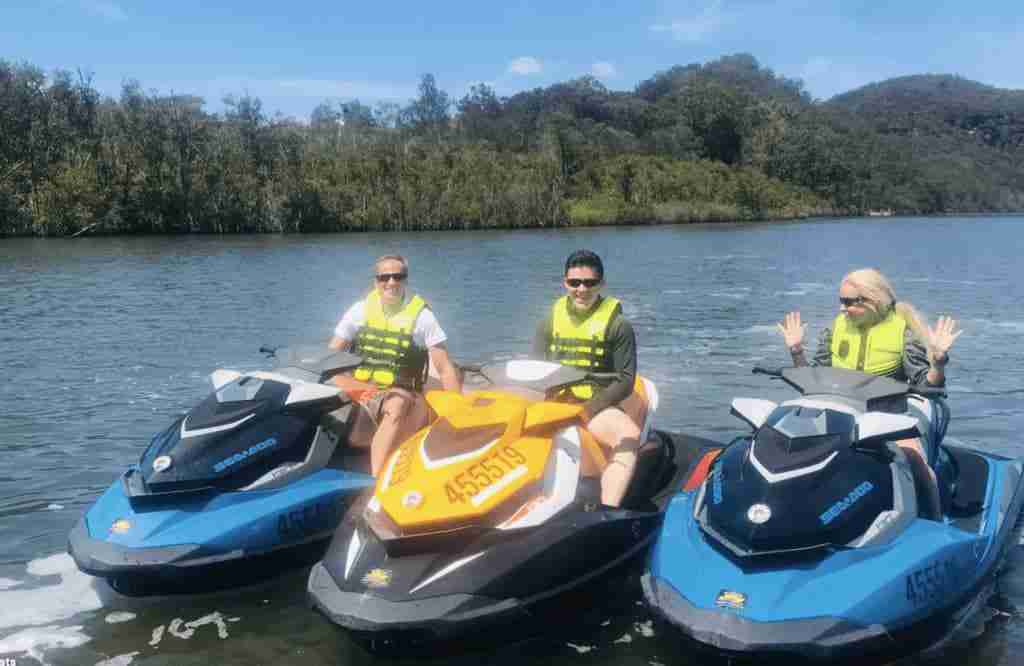
Did you know that you can now hire a jet ski on the Sunshine Coast for under $100?! It’s crazy but there are some real bargains around now. I’m a local and I live here!
In my opinion, it’s one of the best places to hire a jet ski in Australia. From year-round great weather to white sandy beaches and a distinct lack of crowds since everything is so spread out.
[elementor-template id=”2211″]
You’re probably looking for some fun and excitement, but without spending a fortune. Perhaps a tour or self-hire option. If that’s you, then I’ve got you covered here.
Best hire shops on the Sunshine Coast
If you’re looking for a good mob to look after you, then I’ve done the searching around. I live right here in Queensland so I have tabs on who’s the best.
Let’s have a look at what we’ve got available:
Caloundra Jet Ski Hire
Maroochy River Jetski Hire
Ocean Jetski at Mooloolaba
Noosa Jet Ski Hire
Noosa River Jet Ski Hire
TBoat Hire in Noosa
Truth be told, all of these are great options! I haven’t listed these in any particular order either.
I searched for reviews on each of these and none of them really came out all that negative. This I believe is a sign of the genuine nature of Queensland business owners.
Price of jet ski hire
I’ve noticed that the cost of jet ski hire on the Sunny Coast is almost identical between operators. I guess competition keeps everyone on their feet.
Fact: You can hire a jet ski for under $100 on the Sunshine Coast today. It’s actually $90 total, but it’s only a 30-minute ride.
Sunshine coast jet ski hire: under $100 to ride now 204
Just as you’re starting to have fun on your jet ski, you’ll have to finish up on the tour. Trust me…that isn’t that fun!
Save up some extra pennies and go for a longer tour. I recommend 2 hours actually so you can explore much of what the Sunshine Coast has to offer.
Pricing for hires is generally as follows:
PWC Hire Length
Organized Tour
Self-Drive Option
1/2 hour
$90
$80
1 hour
$170
$150
1.5 hours
$250
$220
2 hours
$310
$250
Price includes fuel. With the self-drive option, you will need to have a jet ski licence issued in Australia for insurance purposes. A bond will also be required for self-hires but tour organizers generally don’t ask for a rental bond. You won’t need to launch/retrieve the jet ski at the boat ramp as the hire company will do that for you.
With 30 minutes of riding you’ll only do like 10km, but with 2 hours of riding you can expect to cover almost 100km. If you’re looking for fun, freedom and thrills, then trust me…go for a hire of 2 hours MINIMUM!
You’re out there to have fun, not look at your clock. You already watch the clock at work all week long. 🙂
Choosing a Tour Operator
Not everyone is created equal, but on the Sunshine Coast you’ll be well looked after by all the options I’ve listed.
Sunshine coast jet ski hire: under $100 to ride now 205
But if you wanted to research and dig deeper, I’ve written the following guide for you. Others have found it quite helpful when deciding which Sunshine Coast Jet Ski Hire and Tours company to go with.
Just how long the particular tour shop has been in business.
The additional cost (if any) should your friend want to hop on the back.
If they will provide a 100% refund if the weather turns bad on the day.
The make/models of the jet skis in their fleet (Generally Yamaha/SeaDoo)
Where exactly you will travel to and if it’s actually scenic to visit.
Any stops you will do on the tour to stretch your legs and see some sights.
Any inclusions such as lunch, soft drinks or even a marriage proposal!
What you can and can’t do
Many people now get excited at the notion of hiring a jet ski. After all, the Sunshine Coast is a haven for watersports, in addition to the Gold Coast. I personally find it much less crowded.
Here are some things you can do:
Reach the top speeds that the tour leader permits (Usually 60km/h but on a jet ski this feels more like 100km/h!)
Do a range of S turns and carve hard into the corners.
Ride over the wake of other marine users such as large boats.
Accelerate as fast as you can.
Ride while standing so you can avoid a sore backside tomorrow.
You can certainly have fun!
But then, you won’t be allowed to do these things:
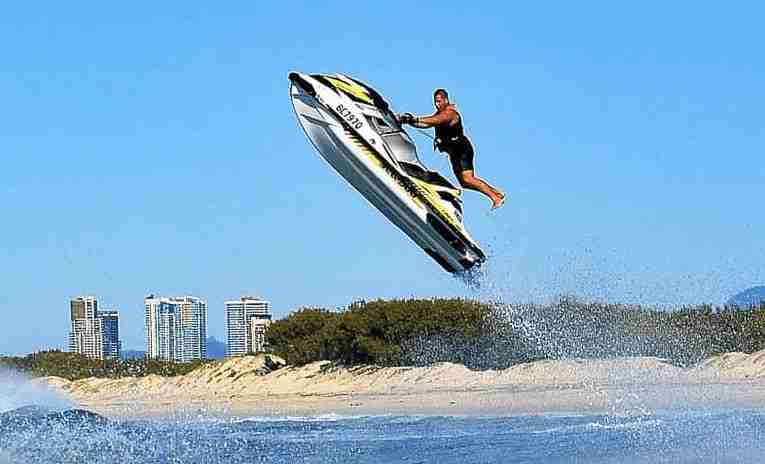
Jet ski wave jumping. No one will allow this for liability reasons.
Playing jet ski races. There is a set minimum distance that Maritime Safety Queensland has permitted, so you can’t do a race between you and a mate.
Tow sports. These same companies won’t allow you to tow your family behind either with a tour or self-hire option. Again, it’s due to liability reasons.
Doughnuts. Spinning around sounds like fun, until you fall off and your jet ski weighing over 300kg runs you over. This is a quick way to get banned from a tour.
Jumping waves won’t be permitted with a jet ski hire or tour.
Have fun on the Sunshine Coast!
The most important thing to do out there on a tour is to have fun.
Take your water bottle, hat and sunscreen. Bringing your own wetsuit will give you more comfort than what they might have on offer.
Go for a longer tour because you’re not there for quick thrills. The additional spend is much more worth it!
[elementor-template id=”2211″]
By the way…once you buy a jet ski, then you’ll want to read my next guide.